






Mobile Weather Station Being Powered by Solar Energy
May 5, 2018
Navigation Bar
Apply Theme
Get the weather information through an Android app constantly and use the solar energy generated by the PV panel to charge devices.
Keywords
Hardware
- Arduino Nano R3 [1]
- Lipo Rider V1.3 [1]
- Solar Panel [1]
- HC-06 Bluetooth Sensor[1]
- DHT11 Temperature and Humidity Sensor[1]
- Laser Module[1]
- Li-Ion Battery[1]
- Mini Breadboard [2]
- Jumper Wires [1]
Software
Description
I had been working on a circuit being powered by the solar energy to charge my phone battery and I realized I could make it more efficient by turning the circuit into a portable weather station sending data to my phone through an Android app(Station) over Bluetooth, so I used Lipo Rider V1.3 to charge a lithium battery with the solar energy generating by a solar panel and to power Arduino Nano with the lithium battery as a current source.


How to connect Lipo Rider V1.3 to a solar panel and a lithium battery?
Components outside of the range may cause a circuit overload to Arduino, according to Lipo Rider V1.3 page on SeeedStudio.com so that make sure the solar panel and the lithium battery you have are in the right specifications for Lipo Rider.


Solder a JST connector to the solar panel and the lithium battery if it was not attached them one.


Connect the solar panel and the lithium battery to JST inputs and turn the control button on, then it is ready to charge either a phone battery or Arduino Nano.


Mobile Weather Station
Make the connections by taking the steps at the code and the schematic below.

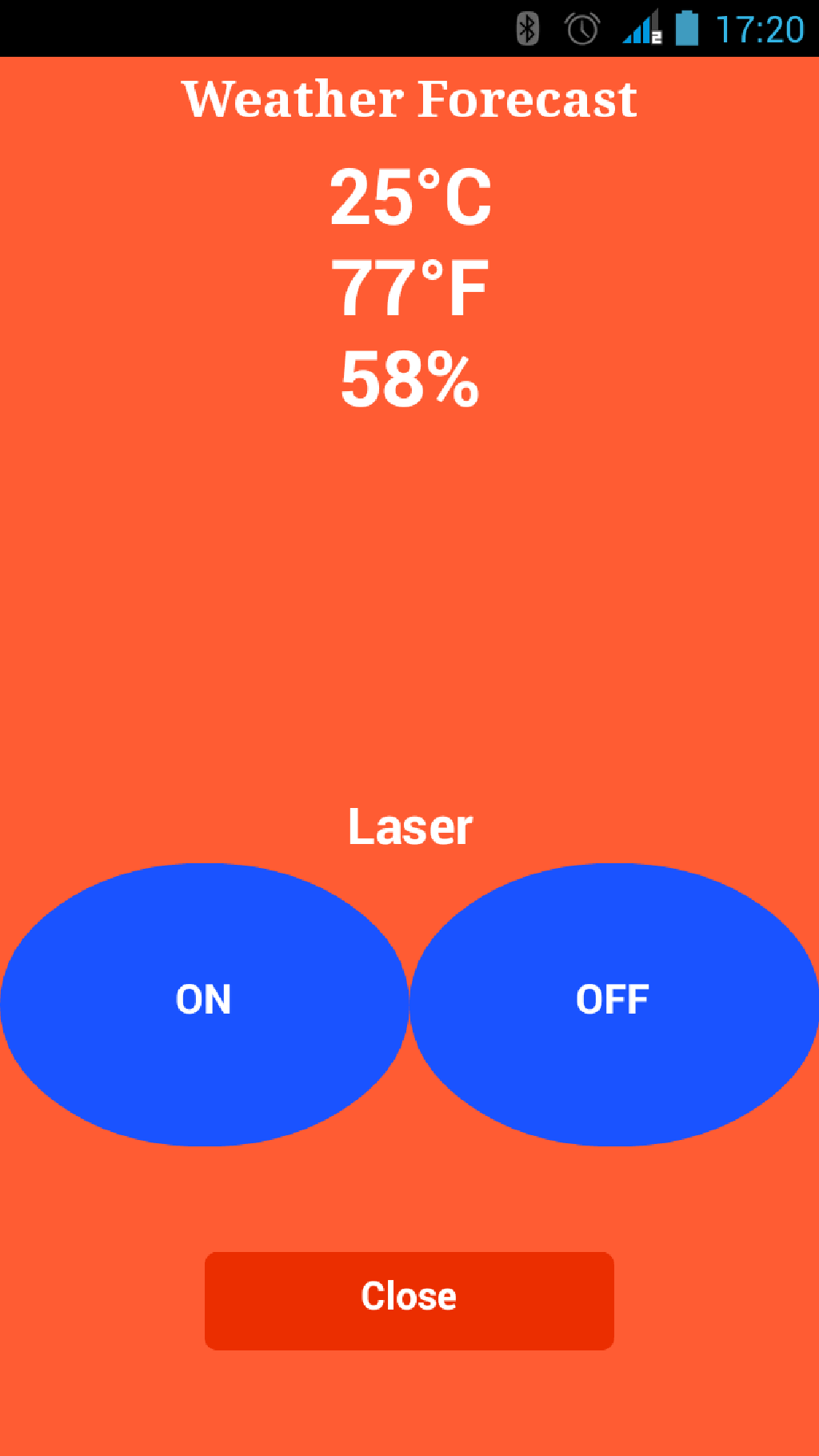
In addition to the features of the project, I made a laser module controlled by Station (Android app), just for fun.

When the code is uploaded to Arduino Nano, Station (Android app for the project) is ready to collect the data packet being send by HC-06 Bluetooth Module.
Station (Android App)
Features:
-Get the weather information constantly.
-Control the laser module


This application is created by using the source code of MIT App Inventor 2 and the app is compatible with Android version 2.1 or up.

You can download the app and upgrade it by changing Station .aia file below.
Conclusion
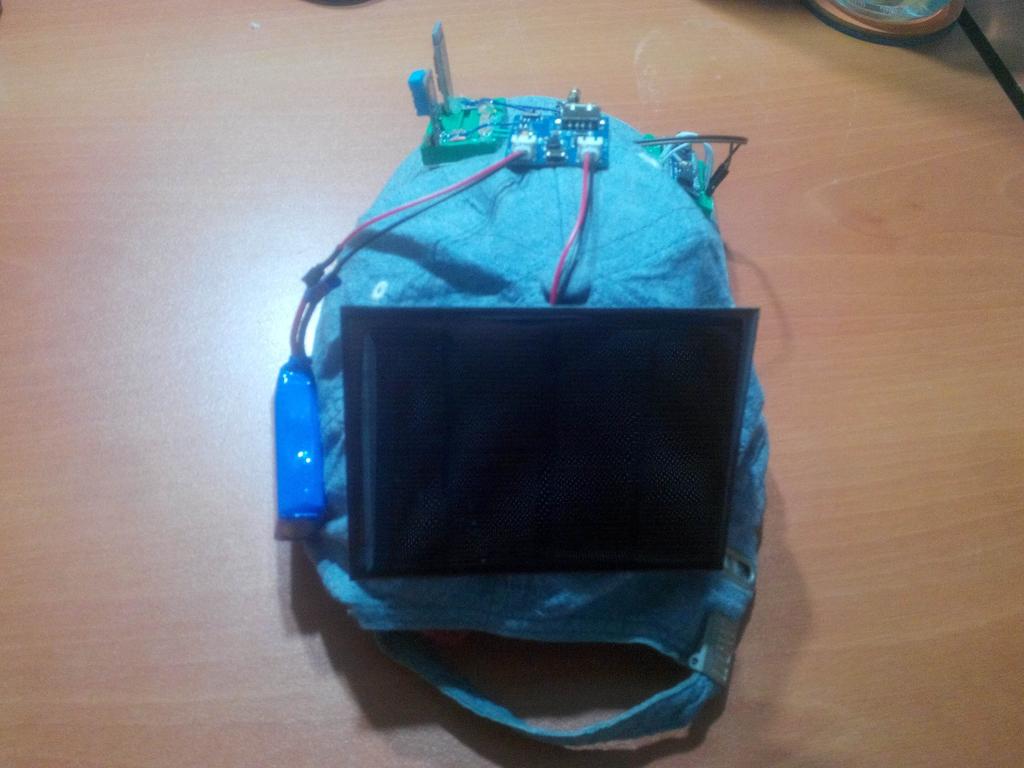
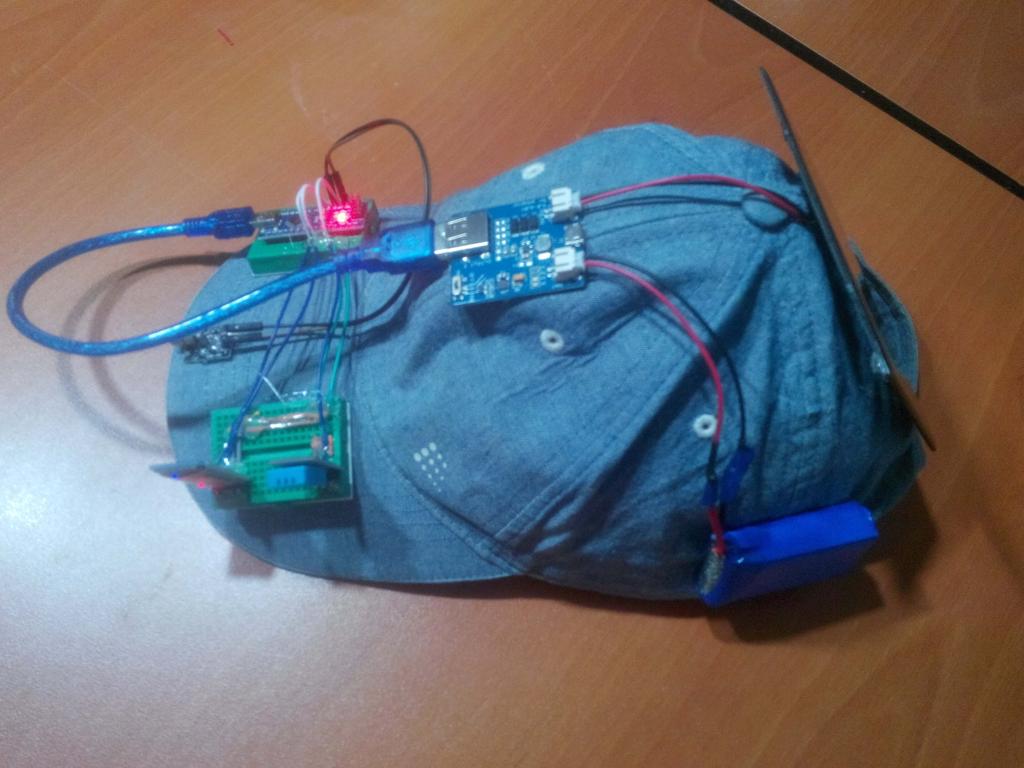
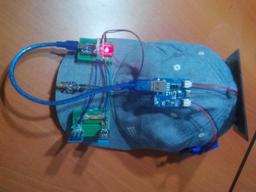
After I finished the project, I put it on the top of my rope hat by using a hot glue gun and therefore sunlight strikes the solar panel at close to a right angle. Now, I use my improved rope hat as a test device for my experiments at the outside.


Videos
Project GitHub Repository
The project's GitHub repository provides:
- Code files
- Mobile application AIA and APK files (Android)
Schematics

Code
Custom assets
See on other platforms
Related projects
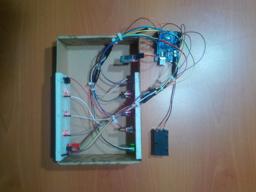
Create a People Counter controlled by an Android app
Make a people counter that detects the number of people who enter the room using lasers and LDRs and control it with an Android app.

Mobile Water Level Tracker
View the water integrity and level of selected areas on your Android phone by using an HC-06 Bluetooth module to make an irrigation system.
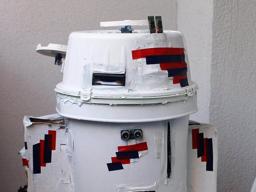
Make an Enhanced R2-D2 to Be Controlled by an Android App
Make an R2-D2 replica and control it by an app you programmed. Add a Nokia interface which gives you the Star Wars characters info.
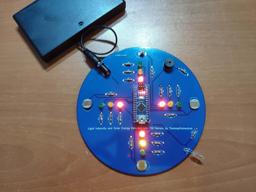
Light Intensity and Solar Energy Detector with Tilt Sensor
Evaluate the possible magnitude of solar energy by the light intensity in a given direction to charge batteries efficiently.
IoT Tesla Coil and Cooling Fan on the Localhost
Develop a web application in PHP and JavaScript to control a Tesla coil and a cooling fan via Arduino Nano 33 IoT. Get information from the Tesla Coil Controller without needing to click to a classic submit button.